Why Generator No-Load Testing Can Miss Critical Problems in Dubai Buildings
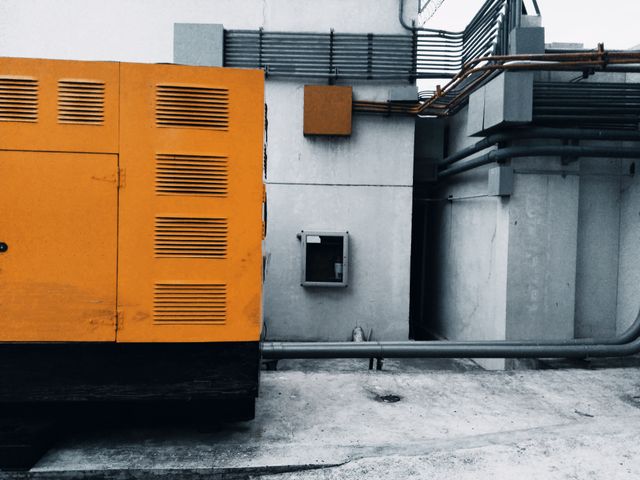
A generator can start successfully during a no-load test and still fail when a building actually needs backup power. This is because starting the engine and running it without a meaningful electrical load does not fully test how the generator, alternator, fuel system, cooling system, controls, and connected electrical infrastructure perform under operating conditions.
For commercial and residential buildings in Dubai, reliable standby power is particularly important for essential systems such as fire and life-safety equipment, lifts, pumps, security systems, emergency lighting, data infrastructure, and critical building services. A generator that appears healthy during a basic test may still have problems that only become visible when it is required to carry a substantial load.
This is why generator maintenance in Dubai should include more than simply starting the unit and checking whether it runs. Understanding the limitations of no-load testing can help facility teams identify hidden faults before an actual power failure exposes them.
What Is Generator No-Load Testing?
A no-load test involves starting a standby generator without connecting it to a significant electrical load. The engine runs, allowing technicians to observe basic operating conditions such as starting behaviour, engine sound, oil pressure, coolant temperature, voltage, frequency, and control-panel indications.
This type of test has value. It can confirm that the generator starts and that several basic parameters appear normal.
However, it does not reproduce the electrical demand the generator is designed to handle during an outage.
Why a successful start is not enough
A generator has multiple systems that must work together when supplying power. The engine must produce sufficient mechanical power, the alternator must generate stable electricity, the fuel system must deliver adequate fuel, cooling must control operating temperature, and the electrical controls must respond correctly.
Some problems remain hidden when the generator is operating without a substantial load.
Critical Problems That May Remain Hidden
No-load operation can provide useful information, but several faults may only become apparent when the generator is subjected to realistic demand.
Inadequate fuel delivery
A generator may run smoothly at low demand even when the fuel system cannot deliver the volume required under heavy load.
Blocked filters, restricted fuel lines, deteriorated fuel, injector problems, or issues with the fuel pump can reduce the engine’s ability to produce sufficient power.
Under no-load conditions, the generator may not require enough fuel for the restriction to become noticeable.
Cooling system weaknesses
The cooling system has to remove heat generated during sustained operation. A radiator, coolant circuit, fan, thermostat, water pump, and associated components all contribute to temperature control.
A generator operating without load produces considerably less heat than one carrying a substantial electrical demand. As a result, a cooling problem may remain unnoticed during a short no-load run.
A partially blocked radiator or inefficient cooling fan may become a serious issue only when the generator operates under load for an extended period.
Alternator performance problems
The alternator is responsible for converting the engine’s mechanical energy into electrical power. Its performance needs to remain stable when the connected electrical demand changes.
No-load testing provides limited information about how the alternator behaves when supplying actual equipment.
Issues involving voltage regulation, winding condition, insulation, excitation, or electrical connections may become more apparent when the generator is carrying a meaningful load.
Voltage and frequency instability
Stable voltage and frequency are important for sensitive electrical equipment. A generator can display acceptable readings while running without load but behave differently when demand increases.
Poor governor response, control-system issues, or mechanical limitations may cause frequency fluctuations. Voltage regulation problems can similarly become more noticeable as electrical demand changes.
Engine loading problems
Diesel engines are designed to operate within particular load ranges. Repeatedly running a standby generator for short periods with little or no load does not reproduce the conditions experienced during a real outage.
Insufficient loading over time can also contribute to issues such as incomplete combustion and carbon accumulation, depending on the engine and operating conditions.
This makes an appropriate testing strategy an important part of diesel generator maintenance in Dubai.
Why Dubai’s Environment Makes Testing Important
Environmental conditions can influence generator performance. Dubai’s high temperatures, dust, and demanding cooling conditions can place additional stress on standby power equipment.
High ambient temperatures
A generator’s cooling system has to reject heat into the surrounding environment. When outdoor temperatures are already high, the cooling system has less thermal margin available.
A generator that performs adequately during a brief no-load test may behave differently during prolonged operation on a hot day.
Dust and restricted airflow
Dust accumulation can affect radiator surfaces, filters, ventilation openings, and other components. Reduced airflow can gradually reduce cooling efficiency.
Regular inspection and cleaning therefore form an important part of generator upkeep.
Fuel storage conditions
Standby generators may remain unused for long periods. Fuel quality can deteriorate over time, particularly when storage and maintenance practices are inadequate.
A no-load start may not expose fuel-delivery limitations that become apparent when the engine needs to produce substantially more power.
What Load Testing Reveals
Load testing places the generator under a controlled electrical demand. This allows technicians to observe how the complete system responds when it has to produce meaningful power.
Engine response
A load test can show whether the engine maintains stable operation as demand increases. Abnormal smoke, temperature changes, speed fluctuations, or other symptoms may become easier to identify.
Electrical stability
Voltage and frequency can be monitored while the generator operates at different load levels. This provides more useful information about alternator and control performance than a no-load reading alone.
Cooling performance
Operating under load generates significantly more heat. Monitoring temperature during the test can help identify cooling limitations that would otherwise remain hidden.
Fuel-system performance
The test can reveal whether the engine receives adequate fuel as power demand increases. This can help identify restrictions or performance problems before they cause a failure during an outage.
Automatic transfer behaviour
For standby systems, the generator is only part of the emergency-power arrangement. The automatic transfer switch and associated controls also need to respond correctly.
A comprehensive test can assess the transition between the normal power supply and generator supply, where the system configuration and test procedure allow it.
No-Load Testing Still Has a Role
The limitations of no-load testing do not make it useless. It remains a practical routine check for confirming basic starting and operating conditions.
The problem arises when it is treated as the only meaningful generator test.
What a basic test can confirm
A no-load run can help identify:
- Starting difficulties
- Unusual engine noise
- Visible leaks
- Low oil pressure indications
- Abnormal coolant temperature
- Battery or charging issues
- Control-panel alarms
- Basic voltage and frequency readings
- Obvious exhaust abnormalities
These checks can provide an early indication that maintenance may be required.
What it cannot fully prove
A no-load test cannot reliably demonstrate that the generator can sustain the electrical demand expected during a real outage.
That distinction is important for buildings where standby power supports critical infrastructure.
How Facility Teams Can Improve Generator Testing
A practical maintenance programme should combine routine inspections with appropriate performance testing.
Follow the manufacturer’s requirements
Generator manufacturers specify maintenance intervals, operating conditions, inspection requirements, and testing procedures for their equipment. These should form the starting point for any maintenance programme.
Test according to the building’s risk profile
A building supporting critical systems may require a more comprehensive testing strategy than a property with limited standby-power requirements.
Facility teams should identify which loads depend on the generator and determine the consequences of generator failure.
Monitor trends, not just individual readings
Recording parameters over time can help identify gradual changes. A small increase in operating temperature, repeated frequency fluctuations, or changing oil-pressure behaviour may be more meaningful when compared with previous test results.
Inspect associated systems
Generator reliability also depends on supporting equipment. Batteries, fuel tanks, exhaust systems, ventilation, cooling, control panels, transfer switches, cables, and connections should be included in the overall maintenance approach.
Warning Signs That Deserve Attention
Certain observations during routine testing should not be dismissed simply because the generator starts.
Excessive exhaust smoke
Unusual smoke can indicate combustion, fuel, air-intake, or engine-related problems and should be investigated according to the equipment manufacturer’s requirements.
Unusual vibration or noise
Changes in vibration or operating sound can indicate mechanical problems, loose components, alignment issues, or other faults.
Temperature rising faster than expected
Unexpected temperature increases can point toward cooling-system restrictions or other operating issues.
Delayed starting
Slow cranking or repeated starting attempts may indicate battery, starter, fuel, control, or engine-related problems.
Unstable electrical readings
Fluctuating voltage or frequency should be investigated rather than assuming that a no-load reading represents full operating performance.
A Better Approach to Generator Reliability
Generator reliability is not established simply because an engine starts during a scheduled test. The objective is to determine whether the complete standby-power system can perform when the building actually depends on it.
For facility managers, this means treating no-load testing as one part of a broader maintenance programme rather than the final measure of generator health. Routine inspections, preventive maintenance, controlled load testing, electrical checks, fuel-system inspections, cooling-system assessment, and monitoring of connected equipment can provide a more complete picture.
This approach is especially relevant in Dubai, where high ambient temperatures and dusty conditions can add operational stress to equipment that may already spend long periods in standby mode.
Conclusion
A no-load generator test answers an important but limited question: can the generator start and run without significant electrical demand? It does not necessarily answer the more important question of whether the system can deliver dependable backup power when a building experiences a real outage.
For properties where continuity of power is essential, regular inspection and appropriately planned testing can expose weaknesses before they become operational failures. Galaxy Technical Services provides generator maintenance and broader technical maintenance support for commercial, residential, and healthcare facilities in the UAE, with services covering generators, electrical systems, HVAC, plumbing, and other building infrastructure. A structured maintenance approach can help facility teams keep standby-power systems prepared for the conditions in which they are actually expected to perform.
At Galaxy Technical Services, we specialize in delivering reliable, professional plumbing solutions customized to both commercial and residential needs. With our skilled team and advanced tools, we ensure that your plumbing systems stay efficient, safe and worry-free.