Chilled Water Pump Losing Pressure? Operational Causes to Check First
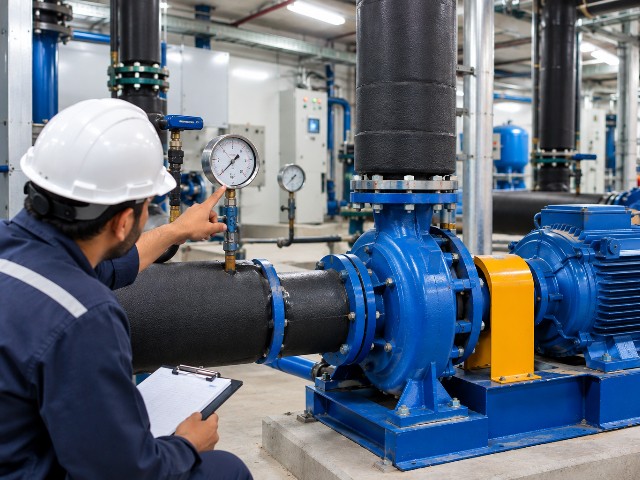
A chilled water pump losing pressure can quickly affect the performance of an entire HVAC system. Reduced pressure may lead to inadequate chilled water flow, uneven cooling, higher energy consumption, repeated alarms, and increased strain on connected equipment. Before replacing the pump or assuming that the pump itself has failed, it is important to investigate the operational conditions around it.
In many cases, the cause can be related to air in the system, restricted flow, incorrect valve positions, clogged strainers, control settings, or changes in system demand. A structured check can help identify the actual source of the pressure loss and prevent unnecessary repairs.
Start With the Pressure Difference
Before troubleshooting individual components, establish exactly what has changed.
A chilled water pump does not operate based on pressure alone. Its performance is closely related to flow rate, differential pressure, pump speed, system resistance, and operating conditions. Comparing current readings with the original design or commissioning values can provide a much clearer picture.
Check the Pump Suction and Discharge Readings
Record the pressure at the pump suction and discharge sides and calculate the differential pressure.
A lower-than-expected differential pressure can point toward several possibilities, including:
- Insufficient pump speed
- Restricted or incorrect flow conditions
- Air entering the system
- Impeller or pump wear
- Incorrect valve positioning
- Changes in system resistance
- Instrumentation problems
If the pressure reading itself is unreliable, further troubleshooting based on it may lead to the wrong conclusion.
Confirm the Pressure Gauges
A faulty or poorly calibrated pressure gauge can make a healthy pump appear to be underperforming.
Compare readings with another reliable measurement point where possible. If the gauges show inconsistent or implausible values, verify the instruments before proceeding with major mechanical work.
1. Check for Air in the Chilled Water System
Air is one of the operational conditions that should be investigated early when a chilled water system develops unstable pressure or flow.
Air pockets can interfere with circulation, create abnormal pump behaviour, and contribute to noise or fluctuating readings.
Look for Common Air-Related Symptoms
Pay attention to:
- Gurgling or unusual water-flow sounds
- Fluctuating pressure readings
- Unstable flow
- Air repeatedly collecting at high points
- Poor cooling at some terminal units
- Irregular pump operation
The system’s air separator, automatic air vents, expansion arrangements, and high points should be checked as part of the investigation.
If air is repeatedly entering the system after being removed, the objective should not simply be to vent it again. The source of the air ingress needs to be identified.
2. Inspect the Pump Suction Strainer
A partially blocked suction strainer can restrict the water reaching the pump. As the restriction increases, the pump may struggle to maintain the expected operating condition.
This is particularly important in systems where debris, corrosion products, scale, or installation-related particles have entered the chilled water circuit.
What to Look For
During inspection, check whether:
- The strainer is heavily contaminated
- The differential pressure across the strainer has increased
- The strainer has not been cleaned for an extended period
- Debris is returning after recent maintenance
- The system has recently undergone installation or modification work
Cleaning the strainer may restore flow, but recurring contamination suggests that the chilled water system itself may require closer examination.
3. Verify Every Relevant Valve Position
A pump can be mechanically healthy and still fail to achieve its expected pressure if the water path is restricted.
A partially closed isolation valve, balancing valve, control valve, or other incorrectly positioned component can significantly alter system resistance.
Check the Actual Valve Configuration
Do not rely only on drawings or assumptions. Physically verify the operating position of relevant valves.
This is especially important after:
- Maintenance work
- Pump replacement
- Chiller servicing
- Pipeline modifications
- Commissioning activities
- System balancing
- Emergency repairs
A valve left in the wrong position can create symptoms that look like a pump fault.
4. Examine Pump Speed and VFD Settings
Many modern chilled water systems use variable frequency drives to adjust pump speed according to cooling demand.
If the pump is running below its required speed, the resulting pressure and flow may be insufficient for the current system demand.
Review the VFD Parameters
Check:
- Actual pump speed
- Speed command
- Minimum and maximum frequency settings
- Pressure setpoint
- Differential-pressure control
- VFD alarms
- Automatic control signals
- BMS communication
A control problem can sometimes reduce pump speed even though the pump and motor are mechanically sound.
For systems using variable-speed pumps, troubleshooting should therefore include the control strategy rather than focusing exclusively on the pump assembly.
5. Consider Changes in System Demand
Chilled water systems do not always operate under the same load conditions.
A building may have changed occupancy, operating hours, cooling requirements, or equipment configuration. Additional air handling units, fan coil units, or modifications to the chilled water network can also alter system behaviour.
Compare Current Conditions With Design Conditions
Ask whether:
- New cooling loads have been added
- Some branches have been isolated
- Major valves have been changed
- Equipment has been replaced
- Building occupancy has increased
- Operating schedules have changed
- The pump is serving a different load than originally designed
A pump that previously operated correctly may not deliver the same results after significant changes to the network.
6. Inspect the Impeller and Pump Assembly
If operational checks do not identify the issue, the pump itself should be examined.
Wear, corrosion, fouling, or damage to the impeller can affect the pump’s ability to generate the required pressure.
Mechanical Conditions to Check
A professional inspection can include:
- Impeller condition
- Shaft condition
- Coupling alignment
- Bearings
- Motor performance
- Mechanical seal
- Unusual vibration
- Abnormal operating noise
Pump wear is more likely to become significant when the equipment has operated for long periods under demanding conditions or when water quality has not been adequately controlled.
7. Do Not Ignore Chilled Water Quality
Water quality can have a direct impact on the performance and long-term condition of chilled water equipment.
Scale, corrosion products, biological contamination, and other deposits can affect pipes, strainers, heat exchangers, valves, and pump components.
This is why chilled water treatment should be considered alongside mechanical maintenance.
Look for Evidence of Water-Side Problems
Warning signs can include:
- Frequent strainer blockage
- Visible corrosion
- Discoloured system water
- Repeated deposits
- Heat exchanger performance deterioration
- Recurring flow restrictions
Chilled water balancing and chemical treatment are also important parts of maintaining hydraulic performance. Professional HVAC maintenance programmes may include water balancing and monitoring of chilled water conditions where required.
8. Check for System Leakage
A pressure problem can sometimes originate outside the pump.
Water loss from the chilled water circuit can reduce system pressure and eventually affect circulation.
Inspect accessible areas for:
- Pipe joint leakage
- Valve leakage
- Flange leakage
- Mechanical seal leakage
- Expansion tank issues
- Visible water accumulation
- Repeated requirements for system top-up
If the system repeatedly requires water to maintain operating conditions, the cause should be investigated rather than treating top-up as a permanent solution.
9. Review the Expansion Tank and Pressurisation Arrangement
The expansion system plays an important role in maintaining stable pressure as chilled water conditions change.
Incorrect pre-charge, inadequate pressure settings, malfunctioning components, or other problems within the pressurisation arrangement can result in unstable system pressure.
Why This Matters
A pump may appear to be losing pressure when the underlying issue is actually related to system pressurisation.
The expansion tank and associated controls should therefore be checked whenever pressure fluctuations are persistent or difficult to explain.
A Practical Troubleshooting Sequence
When a chilled water pump loses pressure, avoid immediately dismantling the pump. A logical sequence can save time and reduce unnecessary costs.
First: Confirm the Reading
Verify suction pressure, discharge pressure, differential pressure, flow and gauge accuracy.
Second: Check the Water Path
Inspect strainers, valves, filters, pipelines and other restrictions that can affect circulation.
Third: Check Air and Pressure Stability
Investigate air pockets, air vents, expansion arrangements and signs of leakage.
Fourth: Review Controls
Check VFD operation, pump speed, pressure setpoints, BMS signals and control valves.
Fifth: Assess the Pump
Only after the system-side checks should the pump’s impeller, motor, bearings, coupling and other mechanical components be investigated in detail.
This approach helps distinguish a genuine pump fault from an operational problem elsewhere in the chilled water circuit.
When Professional Chilled Water Pump Troubleshooting Is Necessary
Some pressure problems are straightforward, but others require measurements and system-level analysis.
Professional attention is particularly important when pressure remains low after basic checks, cooling performance has deteriorated across multiple areas, the pump is vibrating or overheating, or the system repeatedly develops the same fault.
A complete assessment may involve chilled water balancing, pump performance checks, flow measurements, pressure testing, control verification and inspection of connected HVAC equipment. Proper balancing is particularly important because inadequate water flow can affect cooling consistency and system efficiency.
Regular maintenance can also identify developing issues before they result in a major pump failure. HVAC maintenance programmes commonly include inspection of chilled water pumps and related equipment as part of preventive care.
Prevent Pressure Problems Before They Become Breakdowns
The most effective way to manage chilled water pump performance is to monitor the system before pressure problems become severe.
Maintain records of:
- Suction and discharge pressure
- Differential pressure
- Flow readings
- Pump speed
- Motor current
- Vibration
- Water quality
- Strainer condition
- Maintenance activity
Comparing these readings over time makes it easier to identify gradual changes in performance rather than waiting for a complete loss of cooling.
Conclusion
A chilled water pump losing pressure does not automatically mean the pump needs replacement. The real cause may be a restricted strainer, incorrect valve position, air in the circuit, inadequate system pressure, VFD settings, leakage, water-quality problems, or changing building demand.
A systematic diagnosis that begins with measurements and system conditions can identify the problem more accurately and prevent unnecessary component replacement. Galaxy Technical Services provides chilled water pump installation, maintenance, troubleshooting, repair, and chilled water balancing solutions, supporting reliable HVAC operation across commercial, industrial, and other demanding environments.
At Galaxy Technical Services, we specialize in delivering reliable, professional plumbing solutions customized to both commercial and residential needs. With our skilled team and advanced tools, we ensure that your plumbing systems stay efficient, safe and worry-free.