Chilled Water Pump Sizing: How Undersizing or Oversizing Affects System Efficiency
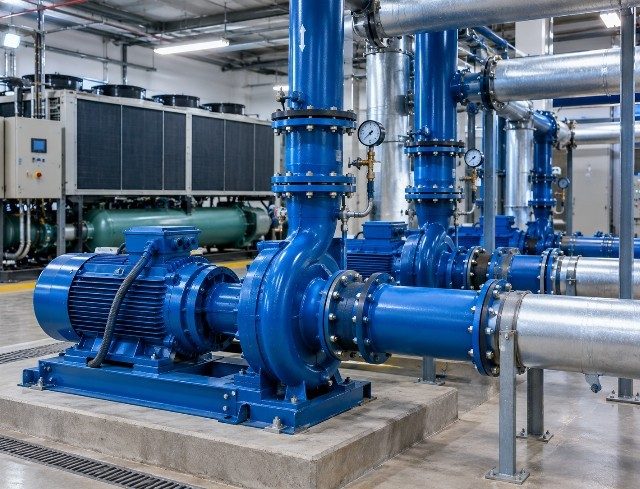
Correct chilled water pump sizing is essential for maintaining cooling performance, controlling electricity consumption, and protecting HVAC equipment. A pump that is too small may fail to deliver sufficient water flow, while an oversized pump can waste energy and create pressure-related problems. Both situations can increase operating costs and affect the comfort of building occupants.
For commercial buildings, offices, hotels, and industrial facilities, selecting the right chilled water pump requires accurate cooling load calculations, pressure loss assessment, and consideration of actual operating conditions. Understanding these factors helps building owners avoid unnecessary expenses and maintain reliable cooling throughout the year.
Why Chilled Water Pump Sizing Matters
Chilled water systems circulate cooled water through air handling units (AHUs), fan coil units (FCUs), and other heat exchangers. As the water absorbs heat from indoor spaces, it returns to the chiller to be cooled again.
The pump maintains this circulation by providing the pressure needed to overcome resistance throughout the piping network. If the pump cannot meet the system’s requirements, cooling performance and energy efficiency can suffer.
Proper HVAC pump sizing considers two primary factors:
- Flow rate: The volume of chilled water required to meet the cooling demand.
- Pump head: The pressure energy needed to overcome resistance from pipes, valves, fittings, coils, and other equipment.
These values must match the system’s design requirements. Selecting a pump based only on building size or chiller capacity can result in poor performance because every installation has different hydraulic characteristics.
How Undersizing a Chilled Water Pump Damages HVAC Performance?
An undersized chilled water pump cannot provide the required flow rate or head under design conditions. This can prevent the HVAC system from delivering its intended cooling capacity, particularly when demand is high.
Inadequate Cooling Across the Building
When water circulation is insufficient, some AHUs and FCUs may not receive enough chilled water to remove heat effectively. Occupants may experience uneven temperatures, warm rooms, or difficulty maintaining the required indoor conditions.
The problem can become more noticeable in buildings with long pipe runs, multiple floors, or cooling equipment located far from the plant room.
Increased Strain on HVAC Equipment
Low water flow can interfere with heat transfer and may cause a chiller to operate outside its permitted conditions. Depending on the equipment and control sequence, this can trigger alarms, protective shutdowns, or reduced cooling output.
An undersized pump may also encourage repeated adjustments to valves and controls in an attempt to compensate for inadequate circulation.
Routine chiller maintenance should include checking water flow and pump operation for this reason.
Longer Operating Hours and Higher Costs
When cooling requirements are not met, the HVAC system may run longer to reach the desired temperature. Although the pump itself may consume less power than a larger unit, the overall system can become less efficient if cooling performance deteriorates.
Building managers should therefore evaluate total HVAC energy consumption rather than assuming that a smaller pump automatically reduces operating expenses.
Difficulty Balancing Water Distribution
An undersized pump may struggle to maintain the required flow through the most hydraulically demanding circuit. This can make it difficult to balance water distribution across different zones.
Before replacing the pump, engineers should also check for blocked strainers, closed valves, air trapped in the system, and incorrect control settings, as these are common reasons a chilled water pump loses pressure.
How Oversizing a Chilled Water Pump Wastes Energy and Money
Choosing a larger pump may seem like a safe way to prevent insufficient cooling. However, excessive pump capacity can create problems that are costly to correct.
Unnecessary Electricity Consumption
An oversized pump may operate at a higher flow rate or pressure than the system requires. If the excess output is controlled through throttling valves, the system can waste energy overcoming resistance that provides no useful cooling benefit.
This is particularly important in commercial buildings where chilled water pumps operate for extended periods.
Excessive Pressure and Valve Noise
Higher-than-required differential pressure can cause control valves to operate poorly, generate noise, and experience greater wear. Valves may struggle to regulate water flow accurately, resulting in unstable temperatures and inconsistent cooling.
Excess pressure can also increase stress on components, although actual damage depends on operating conditions and equipment pressure ratings.
Poor Performance at Partial Load
Buildings rarely operate at peak cooling demand throughout the day. An oversized pump may be inefficient when only a small proportion of the building requires cooling.
In variable-flow systems, incorrect pump selection can make pressure control more difficult and contribute to unstable operation. A variable-frequency drive can help adjust pump speed, but it cannot fully compensate for every sizing or system design mistake.
Higher Installation and Maintenance Costs
Larger pumps may require more powerful motors, additional electrical capacity, and greater installation space. Depending on the design, they may also increase initial equipment costs and maintenance requirements.
Selecting the correct capacity helps avoid paying for performance that the building does not need.
The Key Calculations Behind Correct Pump Selection
Accurate chilled water pump sizing begins with the building’s cooling requirements and the hydraulic resistance of its piping network.
Determine the Required Water Flow Rate
The required chilled water flow depends on the cooling load and the temperature difference between supply and return water.
For water, an approximate calculation in metric units is:
Flow rate (m³/h) = Cooling load (kW) × 0.86 ÷ Temperature difference (°C)
For example, a system with a cooling load of 500 kW and a design temperature difference of 5°C would require approximately 86 m³/h of water flow, subject to the final design and equipment requirements.
An incorrect temperature difference assumption can result in an unsuitable pump selection. Engineers should use the specified operating temperatures and verify the flow requirements of the chiller and connected equipment.
Calculate the Required Pump Head
Pump head must account for pressure losses along the critical water circuit. These typically include:
- Chilled water piping and fittings.
- Chiller and heat exchanger pressure drops.
- AHU and FCU coil resistance.
- Control valves, balancing valves, and strainers.
- Other components along the relevant flow path.
For a typical closed-loop chilled water system, building height is not simply added to the pump head calculation because the elevation changes in the supply and return legs generally balance out. The pump primarily overcomes friction and component losses.
An accurate calculation prevents engineers from selecting a pump with insufficient head or adding excessive capacity as an unnecessary safety margin.
Check the Pump Performance Curve
The pump’s performance curve shows how flow, head, and efficiency relate to one another. Engineers should select a pump that meets the required operating point while remaining within the manufacturer’s recommended operating range.
The best efficiency point (BEP) is particularly important because operating close to this region generally supports efficient performance and reliable operation.
Practical Ways to Improve Chilled Water Pump Efficiency
Correct pump selection is only one part of maintaining an efficient HVAC system. Building owners and facility managers should also pay attention to operating conditions and maintenance.
Review System Performance Regularly
Monitor chilled water supply and return temperatures, differential pressure, flow rates, and pump electricity consumption. Changes in these readings can help identify developing problems before they affect the entire building.
Use Variable-Speed Control Where Appropriate
Variable-frequency drives can reduce pump speed when cooling demand decreases. When correctly designed and commissioned, variable-speed pumping can lower energy consumption while maintaining the required water flow and pressure.
The control strategy must still respect the chiller’s minimum flow requirements and the needs of connected equipment.
Maintain Pipes, Valves, and Strainers
Blocked strainers, faulty valves, and deposits inside pipes can increase resistance and reduce water circulation. Routine inspection and cleaning help maintain the system’s intended hydraulic performance.
Reassess Pumps After Building Changes
Additional floors, new cooling equipment, renovated spaces, and changes in occupancy can alter water flow requirements. Reassessing the system after significant modifications helps determine whether the existing pump remains suitable.
Conclusion
Chilled water pump sizing has a direct impact on cooling reliability, energy consumption, and long-term HVAC operating costs. Undersized pumps can restrict circulation and compromise comfort, while oversized pumps may waste electricity, create control problems, and increase equipment expenses.
The best results come from accurate flow and head calculations, careful pump selection, and regular performance monitoring. For building owners seeking dependable HVAC performance, Galaxy Technical Services provides chilled water pump services and maintenance support to help keep building systems operating efficiently.